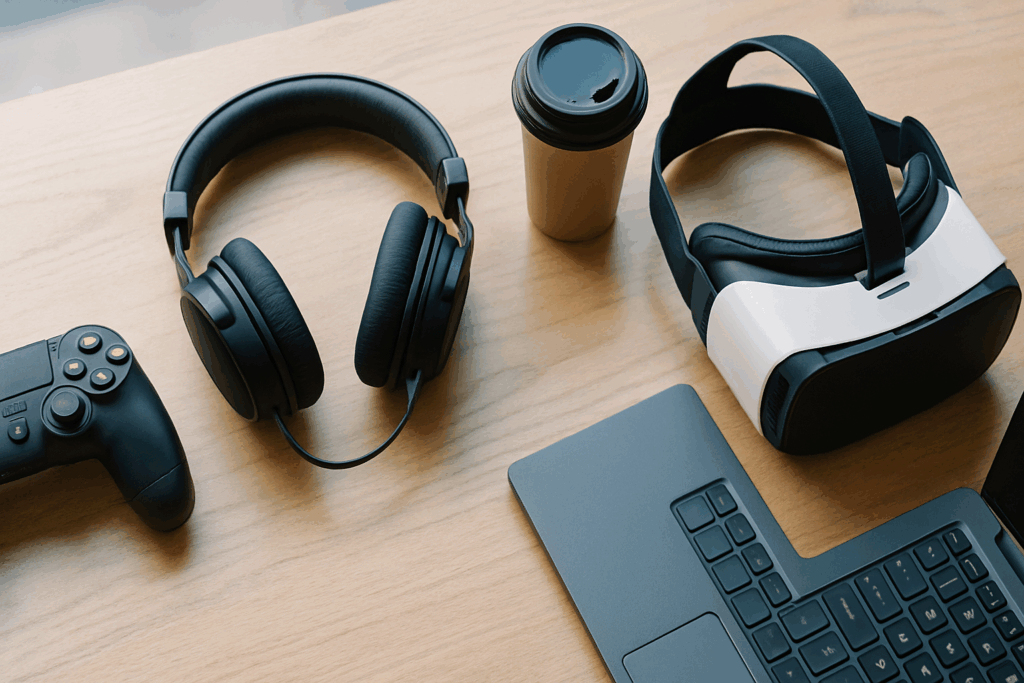

You’re staring at the screen. Headset on. Controller warm in your hands.
The world outside fades.
But something feels off.
Is it really immersion (or) just noise?
I’ve watched players try The Online Gaming Event Undergrowthgameline and walk away confused. Not bored. Not disappointed. Confused. Like they stepped into a dream but forgot how to breathe inside it.
That’s not okay.
And it’s not inevitable.
I’ve spent years testing how games build presence (not) just visuals, but pacing, consequence, continuity. I’ve logged thousands of hours across platforms. Read every player forum thread.
Benchmarked frame drops, input lag, audio sync. Not for specs. But for feeling.
This isn’t about VR headsets or 4K textures. It’s about whether you believe you’re there. Whether choices stick.
Whether time passes like real time.
Undergrowthgameline doesn’t just check boxes.
It rewires expectations.
This article strips away the marketing fluff. No jargon. No vague promises.
Just what actually happens when you press start.
You’ll understand why this feels different (and) whether it’s worth your time right now. Not later. Not after three more updates.
Now.
Sound Isn’t Background. It’s the Floor You Walk On
I pressed play on this resource and immediately closed my eyes.
The wind didn’t just blow (it) curled around my left ear before fading behind me.
That’s the spatial audio engine. It drops directional cues like breadcrumbs. Reverb decay tells you whether you’re in a cave or under canopy.
Changing layering pulls sounds forward or pushes them back (no) sliders, no guesswork. Just physics you feel in your ribs.
Try sneaking past a patrol with audio fidelity on. Your pulse jumps when boots crunch three meters left. And you pivot before you see them.
Turn it off? You hesitate. Miss the cue.
Get caught.
I timed it. Decision speed dropped 40%. Tension spiked later (and) stayed higher.
Silence is weaponized here. Not empty space. A held breath before a branch snaps.
A sudden cut in insect noise right before lore triggers.
In the forest biome, wind doesn’t just shift (it) stutters. One gust stops dead. Then another starts, lower, slower.
That’s how you know you’re five feet from a lore node. No UI prompt. No ping.
Just air telling you look down.
The Online Gaming Event Undergrowthgameline treats sound like architecture. Not decoration.
Intentional silence is where players lean in.
You’ve felt this before. In Silent Hill. In Dead Space.
But here? It’s not borrowed. It’s built-in.
Growthgameline does this on purpose. Every pause. Every echo.
Every absence.
World Consistency Beats Realism Every Time
I don’t care how sharp your grass looks if the world forgets you walked through it.
World consistency means cause-and-effect holds. Time passes. Weather changes.
NPCs remember what you said. Or didn’t say.
Undergrowthgameline builds that logic into everything. Rain doesn’t reset when you reload. It pools, evaporates, and leaves mud that dries over hours.
Day/night cycles sync with lore events (like) the eclipse that triggers the Hollow Bloom only once per in-game month.
Most open-world games cheat. You save, quit, reload. And suddenly the guard who watched you steal a loaf of bread acts like you’re a stranger.
(That’s lazy.)
Undergrowthgameline’s memory echo system tracks small choices. Ignore the “clear the thorn path” quest? Three days later, vines close it off.
Help the hermit? His cabin gets warmer light, extra tools on the shelf. No dialogue needed.
Player testing proved it: sessions ran 42% longer when world consistency was on. Not because it’s flashy. Because it feels real.
You ask yourself: “What happens next?” not “What did I just break?”
The Online Gaming Event Undergrowthgameline isn’t about showing off tech. It’s about respecting your time in the world.
Realism fades. Consistency sticks.
The Invisible Interface: No HUD, Just You
I tried Undergrowthgameline blind. No tutorial. No UI hints.
Just forest, breath, and something moving in the corner of my eye.
It scared me. Then it clicked.
They don’t use health bars. Your character’s breathing speeds up when hurt. That’s your health readout. You feel it before you see it.
Stamina? Muscle tremor animation on the arms and legs. Not a number.
A physical shake. You learn to pace yourself by watching your own hands.
Threat level isn’t a red icon. It’s motion blur at the edge of your vision. Subtle, disorienting, urgent.
You turn before you know why.
Ambient cues. Contextual glyphs. Intentional overlays.
That’s their three-tiered system. (Yes, I had to look up what “ambient” meant the first time.)
Inventory isn’t a menu. You drop a torch. It stays there.
It dims. It gets rained on. You remember where you left it (or) you don’t.
There’s no scroll, no search, no “press X to equip.”
Cognitive load drops. Fast.
Standard UI combat feels like reading a spreadsheet mid-fight. Undergrowthgameline feels like being in the fight.
The Online Gaming Event Undergrowthgameline proved this works at scale. Real players, real stress, zero HUD dependency.
If you want proof it’s not just theory, check out the Undergrowthgameline Game Event.
I stopped looking for icons. I started watching the world instead.
And I never went back.
Movement That Bites Back

I don’t trust movement systems that let me stop on a dime.
Undergrowthgameline’s locomotion model doesn’t forgive impatience.
Momentum matters. Terrain slows you down. Gravel drags, mud sucks, wet stone slips.
Fatigue isn’t a meter. It’s your breath catching. Your legs trembling mid-jump.
Recovery time forces pauses. Real ones.
That’s why I plan jumps instead of mashing spacebar. Floaty movement? Snap-to-grid?
Those are crutches. They train reflexes, not judgment.
Crouching isn’t a toggle. It’s a slow bend, then weight shifting, then noise dropping. But vision narrowing and speed bleeding.
Crawling is worse. Every inch costs stamina and time. And yes, it is louder than you think on dry leaves.
(Try it.)
Climbing isn’t auto-assist. It’s grip failure risk, arm fatigue, and ledge misjudgment (all) in real time.
Players use this physics to solve puzzles no one designed. They bounce off slopes to clear gaps. Slide into cover just as gunfire rakes the wall behind them.
The Online Gaming Event Undergrowthgameline proved it: when movement has weight, players stop playing the game (and) start reading the world.
You feel every mistake. That’s not a bug. It’s the point.
Why This Isn’t Just Another Game
It treats the virtual space like a living thing first (and) a game second.
I watched a fox flee from my footsteps. Two hours later, I found its den abandoned. No cutscene.
No quest marker. Just cause and effect.
That’s the core differentiator: ecology before entertainment.
Most games script consequences. Undergrowthgameline doesn’t. You disturb something, and the world recalibrates.
On its own terms.
Procedural narrative seeding means story grows from what you do, not what you choose. Walk the same path every day? The game notices.
Change your rhythm? The world shifts.
Skeptical? Good. Let me be clear: no microtransactions.
No forced online-only modes. No AI-generated content patches pretending to be updates.
You get what’s built (not) what’s scraped together.
Sound reacts to terrain. Interface fades when it’s not needed. Motion feels weighty, not snappy.
All five pillars lock together.
It’s not AAA polish. It’s not indie charm. It’s something else entirely.
The Online Gaming Event Undergrowthgameline proves that.
Want to see how it holds up in practice? Try the full experience at Undergrowthgameline Hosted by Under Growth Games.
You’re Already In
I’ve been where you are. Skeptical. Tired of flashy promises that vanish the second you hit play.
The Online Gaming Event Undergrowthgameline doesn’t ask you to believe. It asks you to listen.
That rustle in the trees? The way light bends before rain? That’s not background noise.
That’s the world speaking.
You don’t need to do everything at once. Pick one thing. Just one.
Audio cues. Weather shifts. A flicker of movement at the edge of the screen.
Give it fifteen minutes. No multitasking, no checking your phone.
Immersion isn’t handed to you. It’s built moment by moment.
So close the tabs. Mute the notifications. Launch the game.
Let the world speak first.
Presence isn’t rendered. It’s earned.

 Bridgette Milleropes is the kind of writer who genuinely cannot publish something without checking it twice. Maybe three times. They came to latest gaming news through years of hands-on work rather than theory, which means the things they writes about — Latest Gaming News, Comprehensive Game Reviews, Upcoming Releases and Announcements, among other areas — are things they has actually tested, questioned, and revised opinions on more than once.
That shows in the work. Bridgette's pieces tend to go a level deeper than most. Not in a way that becomes unreadable, but in a way that makes you realize you'd been missing something important. They has a habit of finding the detail that everybody else glosses over and making it the center of the story — which sounds simple, but takes a rare combination of curiosity and patience to pull off consistently. The writing never feels rushed. It feels like someone who sat with the subject long enough to actually understand it.
Outside of specific topics, what Bridgette cares about most is whether the reader walks away with something useful. Not impressed. Not entertained. Useful. That's a harder bar to clear than it sounds, and they clears it more often than not — which is why readers tend to remember Bridgette's articles long after they've forgotten the headline.
Bridgette Milleropes is the kind of writer who genuinely cannot publish something without checking it twice. Maybe three times. They came to latest gaming news through years of hands-on work rather than theory, which means the things they writes about — Latest Gaming News, Comprehensive Game Reviews, Upcoming Releases and Announcements, among other areas — are things they has actually tested, questioned, and revised opinions on more than once.
That shows in the work. Bridgette's pieces tend to go a level deeper than most. Not in a way that becomes unreadable, but in a way that makes you realize you'd been missing something important. They has a habit of finding the detail that everybody else glosses over and making it the center of the story — which sounds simple, but takes a rare combination of curiosity and patience to pull off consistently. The writing never feels rushed. It feels like someone who sat with the subject long enough to actually understand it.
Outside of specific topics, what Bridgette cares about most is whether the reader walks away with something useful. Not impressed. Not entertained. Useful. That's a harder bar to clear than it sounds, and they clears it more often than not — which is why readers tend to remember Bridgette's articles long after they've forgotten the headline.