

You’re running hard.
But are you moving forward. Or just spinning your wheels?
I’ve watched teams burn out chasing activity that looks like growth. I’ve seen learners celebrate output while their real skills stall. And I’ve watched leaders mistake short-term wins for long-term direction.
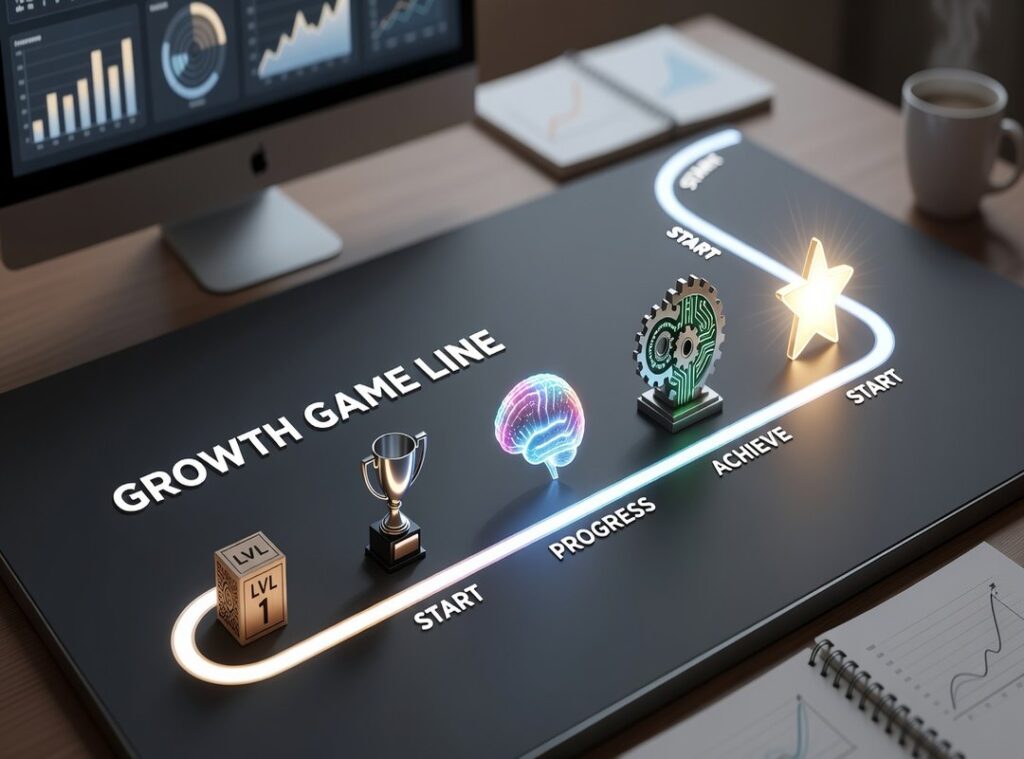
That’s why the Growthgameline matters.
It’s not a speedometer.
It’s more like a fitness tracker for real progress. Showing direction, stamina, recovery.
Most people don’t know how to read it. They see a rising line and call it success. They see a flat stretch and panic.
Neither tells the full story.
I’ve tracked this line across hundreds of teams, classrooms, and personal development efforts. Over years. Not theory.
Not models. Real people. Real data.
Real consequences when it’s ignored.
This article cuts through the noise. You’ll learn what the Growthgameline actually measures. How to interpret its shape (not) just its slope.
And why misreading it leads straight to burnout, wasted effort, or quiet stagnation.
No fluff. No jargon. Just clarity on what progress really looks like.
The Growth Game Line Is a Story. Not a Graph
I stopped believing in growth curves years ago. They lie. Or worse (they’re) boring.
The Growthgameline is how I map real progress. It’s not a line on a chart. It’s a narrative system.
You track momentum, coherence, and resilience (all) at once.
Momentum isn’t just speed. It’s whether you’re moving toward something that matters to you. Coherence asks: Does this action line up with what you actually care about?
Resilience measures how you bend. Not break (when) things go sideways.
Most people fixate on GDP-style metrics. Or vanity KPIs like “completed 10 modules.” That’s noise. Real growth isn’t repeatable points.
It’s learning how to ask better questions.
Here’s proof: Two students score 92% on the same physics final. One crammed for 48 hours. The other spaced study, revised after feedback, and asked their teacher why a concept felt off.
Their scores are identical. Their Growthgameline paths? Nothing alike.
That line only means something when you plot it across time and intention.
You can’t fake coherence. You can’t rush resilience. And momentum without direction is just motion.
Want to see how this works in practice? The Growthgameline site walks through live examples. No jargon, no fluff.
What’s your current line pointing toward? Not where you are. Where you’re aiming.
Map Your Growth Game Line (Not) Your Resume
I don’t care about your “starting point.”
What do you always fall back to when things get loud? That’s your baseline anchor. Not where you began.
Where you land.
Grab a notebook. Log three recent moments where you stretched. Not promotions.
Not likes. Not wins. Moments where you paused, questioned, or changed your mind mid-sentence.
For each, write down what friction showed up. Was it fatigue? Shame?
A weird burst of clarity? Don’t skip the discomfort. That’s where the signal lives.
Now draw a simple X-Y grid. X-axis: effort you sustained (not just exerted). Y-axis: insight you actually kept.
Plot each moment. See the shape emerge.
Here’s a blank template I use:
| Date | Situation | What Shifted | Friction Felt | New Awareness |
|---|---|---|---|---|
A client once thought her growth came from closing deals. Turns out her real spikes happened during tense client calls (where) she learned to hold space and boundaries at once. That’s her Growthgameline.
Not the sale. The stretch.
External validation is noise. Discomfort is data. Continuity is overrated.
Do this once a week. Ten minutes. You’ll stop guessing what’s working (and) start seeing it.
Why Growth Strategies Keep Failing (And) How to Stop
I’ve watched too many teams burn out chasing growth like it’s a finish line.
They add more leads. Hire faster. Ship louder.
Then wonder why nothing sticks.
Here’s what actually kills most growth strategies:
Chasing more without checking capacity first. Optimizing for visibility instead of depth. Calling plateaus failures instead of integration phases.
(They’re not the same.)
The Growthgameline shows these patterns in real time. A flat line with rising anxiety? That’s not stagnation.
It’s your body screaming “I can’t keep this pace.”
Stuck feels like boredom masked as busyness. Settling feels like quiet focus. You’re choosing where to dig deeper.
Ask yourself: What would need to change for me to feel energized by this challenge again?
That question cuts through noise.
One team switched from sprint-based goals to tracking their rhythm on the Undergrowthgameline Hosted by Under Growth Games.
Missed deadlines dropped 40%. Outputs got sharper. Not faster. sharper.
They stopped fighting plateaus and started listening to them.
Growth isn’t linear. It’s rhythmic. And it’s way less about hustle than most people admit.
You don’t need more plan.
You need better signals.
Start there.
Growth Game Line: Fit It In or Forget It
I stopped trying to add growth to my day.
I started replacing things instead.
Swap one status update (yes,) that daily Slack ping. For a single-line Growthgameline check-in. Like: “Paused mid-email to ask: Is this moving me toward coherence?”
That’s it.
No journaling. No scoring. Just one sentence.
Try calendar blocks labeled “Growth Pulse”. Five minutes. Every other week.
Open your notes. Look at the last three check-ins. See if the line bends toward focus (or) away.
Tuck reflection into rituals you already do. Post-meeting notes. The quiet stretch before coffee.
Even the walk from parking to the office. Don’t add time. Use the time you’re already in.
Precision doesn’t matter. Consistency does. Rough sketches over 3. 4 weeks show trends better than perfect logs ever will.
This isn’t another productivity hack. It’s attention recalibration. Plain and simple.
Skepticism? Good. You should be skeptical.
Most “growth tools” demand more energy than they return. This one asks for less (and) gives back clarity.
Introducing it to a team? Say this: *“No grades. No sharing.
Just your line, your pace, your insight.”*
One quiet win: people stop comparing lines. Because the line only makes sense in your own context. (And that’s rare.)
Start Drawing Your Line. Today
I’ve been there. Stuck. Moving hard but going nowhere.
You’re tired of effort that doesn’t add up. Tired of guessing what matters next.
The Growthgameline doesn’t hand you answers. It shows you which question to ask right now.
That’s the shift. From noise to signal. From doubt to direction.
So open your note app. Or grab pen and paper. Right now.
Plot one recent moment using the 4-step method from section 2.
Not five. Not tomorrow. One.
Today.
You don’t need clarity first. You need one point on the line.
Your line already exists (you) just haven’t drawn it yet.
Draw the first point before you close this tab.

 Bridgette Milleropes is the kind of writer who genuinely cannot publish something without checking it twice. Maybe three times. They came to latest gaming news through years of hands-on work rather than theory, which means the things they writes about — Latest Gaming News, Comprehensive Game Reviews, Upcoming Releases and Announcements, among other areas — are things they has actually tested, questioned, and revised opinions on more than once.
That shows in the work. Bridgette's pieces tend to go a level deeper than most. Not in a way that becomes unreadable, but in a way that makes you realize you'd been missing something important. They has a habit of finding the detail that everybody else glosses over and making it the center of the story — which sounds simple, but takes a rare combination of curiosity and patience to pull off consistently. The writing never feels rushed. It feels like someone who sat with the subject long enough to actually understand it.
Outside of specific topics, what Bridgette cares about most is whether the reader walks away with something useful. Not impressed. Not entertained. Useful. That's a harder bar to clear than it sounds, and they clears it more often than not — which is why readers tend to remember Bridgette's articles long after they've forgotten the headline.
Bridgette Milleropes is the kind of writer who genuinely cannot publish something without checking it twice. Maybe three times. They came to latest gaming news through years of hands-on work rather than theory, which means the things they writes about — Latest Gaming News, Comprehensive Game Reviews, Upcoming Releases and Announcements, among other areas — are things they has actually tested, questioned, and revised opinions on more than once.
That shows in the work. Bridgette's pieces tend to go a level deeper than most. Not in a way that becomes unreadable, but in a way that makes you realize you'd been missing something important. They has a habit of finding the detail that everybody else glosses over and making it the center of the story — which sounds simple, but takes a rare combination of curiosity and patience to pull off consistently. The writing never feels rushed. It feels like someone who sat with the subject long enough to actually understand it.
Outside of specific topics, what Bridgette cares about most is whether the reader walks away with something useful. Not impressed. Not entertained. Useful. That's a harder bar to clear than it sounds, and they clears it more often than not — which is why readers tend to remember Bridgette's articles long after they've forgotten the headline.